

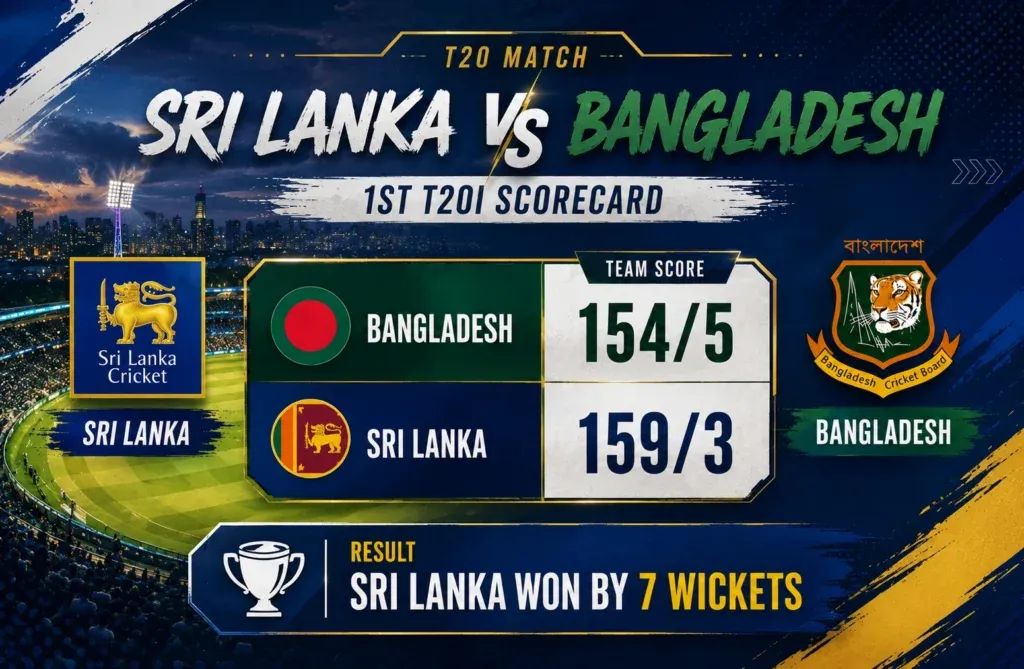
A cricket scorecard helps readers understand how a team builds its innings through individual performances and partnerships. On cricketmatchteam.com, scorecard details can help cricket followers examine the relationship between runs, wickets, and batting partnerships during a match. These details are important because a team total alone cannot explain how an innings developed or why the batting side reached a particular position.
A partnership represents the runs scored by two batters while they are together at the crease. It includes runs credited to the batters and any extras added during that period. The scorecard may display partnership information alongside the batting figures, helping readers identify which pairs contributed most effectively.
Understanding Batting Partnerships
A batting partnership begins when two batters are together at the crease. It continues until one batter is dismissed, retires, or the innings ends. The runs scored during this period form the partnership total.
Partnerships are usually numbered according to the wicket that follows them. The opening partnership is the first partnership of the innings, while the second partnership begins after the first wicket falls. This numbering continues until the final wicket or the end of the innings.
For example, if the opening pair scores 45 runs before the first wicket, the scorecard may record a 45-run first-wicket partnership. The next two batters then begin the second-wicket partnership from the team’s existing total.
Partnership figures help readers understand whether an innings was built through steady cooperation or through short contributions from several players. A large partnership can provide stability, while smaller partnerships may indicate that wickets fell frequently.
Reading Partnership Run Totals
A partnership total is not always equal to the combined individual runs scored by the two batters. Extras may also contribute to the partnership during the time those players are batting together.
Suppose two batters score 28 and 19 runs during a partnership. If the team also receives five extras during that period, the partnership total becomes 52 runs. The scorecard may show this total as the partnership contribution.
This distinction matters when readers compare partnership figures with individual batting scores. The individual scores show what each batter achieved, while the partnership total reflects all runs added to the team during their time together.
Partnership totals can also include runs scored through boundaries, running between the wickets, and applicable extras. The precise presentation depends on the scorecard provider, but the underlying purpose remains the same.
Following The Fall Of Wickets
The fall of wickets section records the team score at which each wicket was lost. It may also show the batter dismissed and the over in which the wicket occurred.
This information is often displayed in a format such as the wicket number followed by the team score. For example, a scorecard might show that the first wicket fell at 38 runs and the second wicket fell at 74 runs.
The fall of wickets record provides a useful timeline of the innings. Readers can see whether the team lost early wickets, built a middle-order partnership, or experienced a late collapse.
The section can also help identify when the match situation changed. If a team moves from 120 for two wickets to 145 for six wickets, the scorecard indicates that several dismissals occurred during a short scoring period.
Connecting Wickets With Partnerships
Partnerships and fall-of-wicket details should be read together. The partnership section explains how many runs were added between dismissals, while the fall-of-wicket section shows the team’s total when each dismissal occurred.
For example, a team may reach 60 runs before losing its first wicket. The next partnership could add another 75 runs, taking the team to 135 before the second wicket falls.
This information shows that the second partnership contributed significantly to the innings. Readers can then examine the individual batting entries to understand which players were involved and how they scored.
A partnership may also end without a large change in the team’s total. If a wicket falls soon after a batter arrives, the fall-of-wicket figures reveal that the team failed to build a substantial stand during that period.
Why Opening Partnerships Matter
The opening partnership often establishes the direction of an innings. Opening batters face the new ball and may need to manage swing, seam movement, or other conditions that make early scoring difficult.
A strong opening partnership can reduce pressure on the middle order. When the first pair scores steadily without losing a wicket, later batters may have more freedom to accelerate or play according to the match situation.
In limited-overs cricket, the opening partnership can also influence the scoring rate during the initial overs. A quick start may create opportunities for the middle order to attack later in the innings.
However, a slow opening partnership is not always unsuccessful. In longer formats, the main objective may be to protect wickets and build a stable foundation before attempting more aggressive scoring.
Middle Order Partnership Patterns
Middle-order partnerships often develop after the opening batters have been dismissed. These stands can be important because they help a team recover from early wickets or maintain scoring after a good start.
A middle-order partnership may involve a batter who plays cautiously and another who scores more quickly. Their different roles can help the team balance stability with scoring progress.
The scorecard may show a partnership lasting many overs even when the run total is moderate. This can be valuable in Test cricket, where surviving difficult bowling periods can influence the match.
In limited-overs cricket, middle-order partnerships often need to maintain momentum. If the scoring rate falls too much, the team may require a stronger finish from the lower order.
Lower Order And Final Partnerships
Lower-order partnerships involve batters who usually occupy the later positions in the batting lineup. These players may have different levels of batting experience, but their contributions can still affect the final team total.
A lower-order partnership can add important runs after the main batters have been dismissed. Even a short stand may help a team reach a more competitive score.
In some matches, the final partnership becomes particularly important. The remaining batters may need to score quickly, protect their wickets, or survive until the end of an innings.
Readers should not ignore lower-order contributions when reviewing a scorecard. A team’s final total may depend heavily on runs added after the seventh or eighth wicket.
Understanding Partnership Duration
Partnership duration can be measured through the number of runs scored, overs faced, or time spent together at the crease. Some scorecards display more than one of these details.
A partnership that lasts 20 overs may be important even if it does not produce a very large run total. It can help the batting side settle after losing wickets or reduce the pressure created by a strong bowling attack.
In shorter formats, the number of balls faced may be more useful than the time spent together. A partnership of 60 runs from 35 balls can influence a T20 match differently from the same total scored from 70 balls.
The match format should therefore guide how readers interpret partnership duration. A long stand in a Test match may reflect patience, while a quick stand in a limited-overs match may reflect attacking intent.
Partnerships And Scoring Rate
The scoring rate of a partnership shows how quickly the team added runs during that period. It can be calculated by dividing the partnership runs by the overs faced, or by using the appropriate balls-based calculation.
A partnership with a high scoring rate may help a team increase its total rapidly. This can be especially useful when the batting side has wickets available and needs to reach a challenging score.
A lower scoring rate may still be useful when the team is trying to recover from early dismissals. The batters may focus on reducing risk before attempting to score more quickly.
Readers should compare the partnership scoring rate with the overall innings rate. This comparison can reveal whether the pair improved the team’s momentum or slowed the scoring during a particular phase.
Recognising Important Partnerships
Not every large partnership has the same impact on a match. Its importance depends on the team position, the match format, the target, and the number of wickets remaining.
A partnership of 80 runs may be highly valuable when a team is 25 runs for three wickets. The same partnership may have a different meaning when the team is already 250 runs for two wickets.
A partnership can also be important because it prevents a collapse. If several wickets fall quickly, a steady stand may restore confidence and give the team a chance to reach a reasonable total.
Readers should consider the match situation before judging the partnership. The scorecard provides the numbers, while the match context helps explain their significance.
Using Partnerships In Match Analysis
Partnership information can help readers evaluate the performance of a batting lineup. A team that builds several useful partnerships may demonstrate greater stability than a team relying on one individual score.
The information can also highlight weaknesses. If a team repeatedly loses wickets soon after a partnership begins, it may struggle to maintain momentum through the middle overs.
Coaches and analysts may use partnership records to study batting combinations. They can examine which pairs work effectively together and how their scoring patterns change against different bowling styles.
However, partnership statistics should not be treated as a complete measure of player quality. Individual technique, match conditions, opposition strength, and the roles assigned to batters also influence performance.
Checking Partnership Data Carefully
Different scorecard providers may display partnership information in different ways. Some show only the partnership total, while others include overs, balls, or individual contributions.
Readers should check the scorecard’s labels before interpreting the figures. A partnership total may include extras, so it should not always be calculated by adding only the two batters’ runs.
The fall-of-wicket section should also be checked for accuracy. A corrected score or revised dismissal decision may change the displayed team total at a particular wicket.
During live matches, partnership figures may update after every delivery. The final scorecard is generally the most reliable version for reviewing completed innings and confirmed statistics.
Conclusion
Partnership and fall-of-wicket information explains how a cricket innings develops beyond the final team total. These details show which batting pairs added runs, when wickets fell, and how the team responded to changing match situations. By reading partnerships alongside individual scores and bowling figures, cricket followers can understand the structure of an innings more clearly. Explore completed and live cricket scorecards, compare partnership patterns, and use the recorded details to gain a better understanding of each team’s performance.
Read also :-
pakistan national cricket team vs australian men’s cricket team timeline